06
Brandweer Training
Unity · Meta Quest · VR TrainingLead developer

01Context
A professional VR firefighter training simulation, released on Meta Quest.
Training software is judged differently from a game: the interaction has to behave correctly, repeatedly, on standalone hardware. I led the system design and architecture, the physics-based XR interaction, the UI and backend, and the optimization and release work for Quest.
02My Ownership
System Design
Architecture
XR Interaction
UI
Backend
Meta Quest
Optimization
03Engineering Scope
Simulation
- System design and architecture
- Physics-based XR interaction
Product surface
- UI
- Backend
Platform
- Meta Quest integration
- Optimization
- Release engineering
04Training Simulation
- Trainee Input
- XR Interaction
- Physics Response
- Training Scenario
- UI
- Backend
- Meta Quest Platform
05Physical Interaction on Standalone Hardware
The interaction model is physics-based rather than gesture-triggered, which is what makes the training transfer: equipment is handled, not selected. That decision sets the architecture, because physically simulated interaction has to stay stable while the scenario around it runs.
Meta Quest is standalone hardware with a fixed budget, so optimization was not a final pass: it constrained the architecture from the start, and the release engineering for the platform was part of the same body of work.
06Delivery
- Architecture
- XR Interaction
- UI / Backend
- Quest Integration
- Optimization
- Release
07Outcome
Released on Meta Quest as a professional training product.
08Visual Evidence
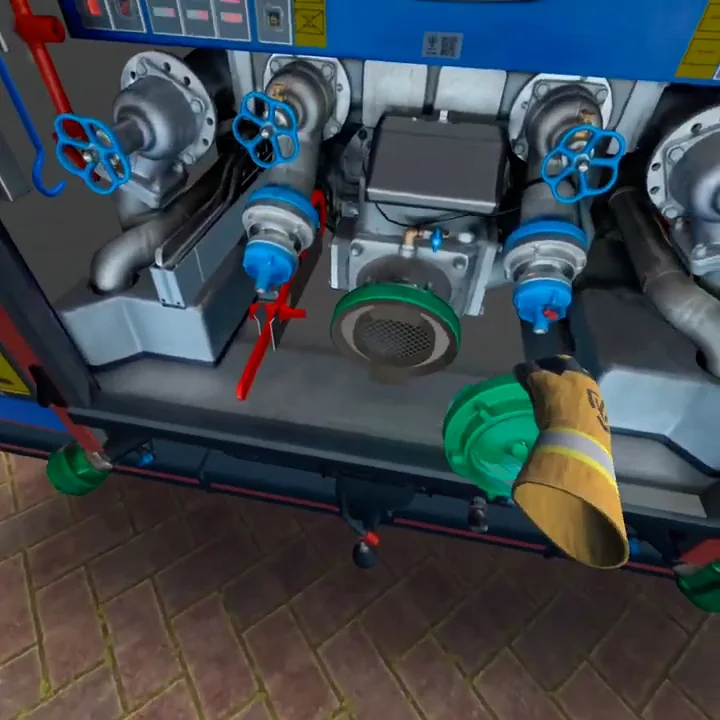
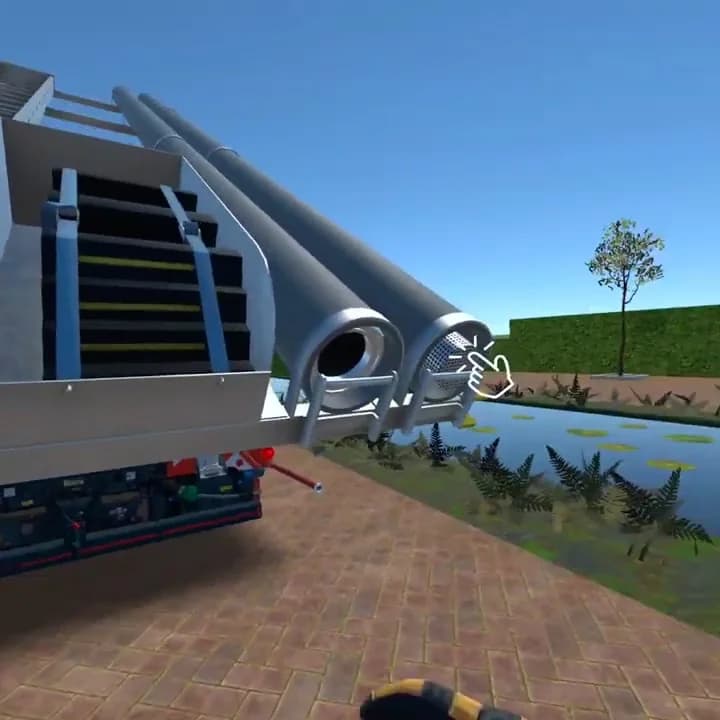
Brandweer Training case study: Affaf Imran